Rhythm review is one of those things that needs to happen… but doesn’t always feel exciting. By the time students have clapped, echoed, and practiced the same rhythms a few times, they’re ready to move on, even though you know they still need more practice.
That’s where rhythm bingo comes in.
It’s simple, it keeps everyone engaged, and it’s always a hit with students of any age.
How Rhythm Bingo Works
If your students have ever played bingo before (and most of them have!), this is very easy to explain.
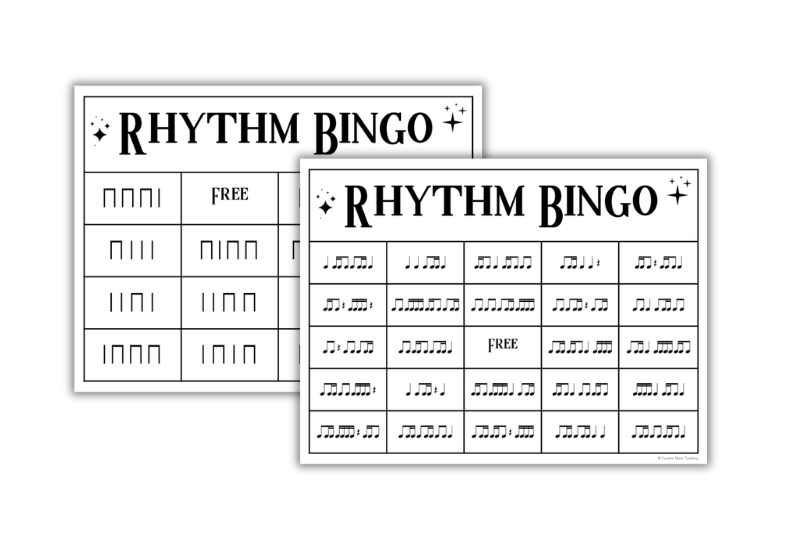
Each student gets a bingo board filled with rhythm patterns. You clap (or show) a rhythm, and students find the matching pattern on their board and mark it.
That’s it.
The goal is to get a row (or whatever variation you choose), just like traditional bingo, but the focus stays on reading and recognizing rhythms.
How to Play Rhythm Bingo in Music
This is what it typically looks like in a classroom:
- Give each student a bingo board and some bingo markers
- Quickly review the rhythms you’ll be using
- Clap one rhythm at a time (to make it easier, you can show the rhythm after clapping it)
- Students identify and mark the matching rhythm if it’s on their card.
- Continue until someone gets bingo
A couple optional variations:
- Have students clap the rhythm back before marking it
- Hold up the rhythm for a quick visual class check before moving on
- Have a student ‘call’ (clap) the rhythms instead of the teacher
Bingo is very easy to set up, which makes it great for those days when you need something that just works.
Easy Ways to Adjust the Difficulty
One of the best things about rhythm bingo is how flexible it is.
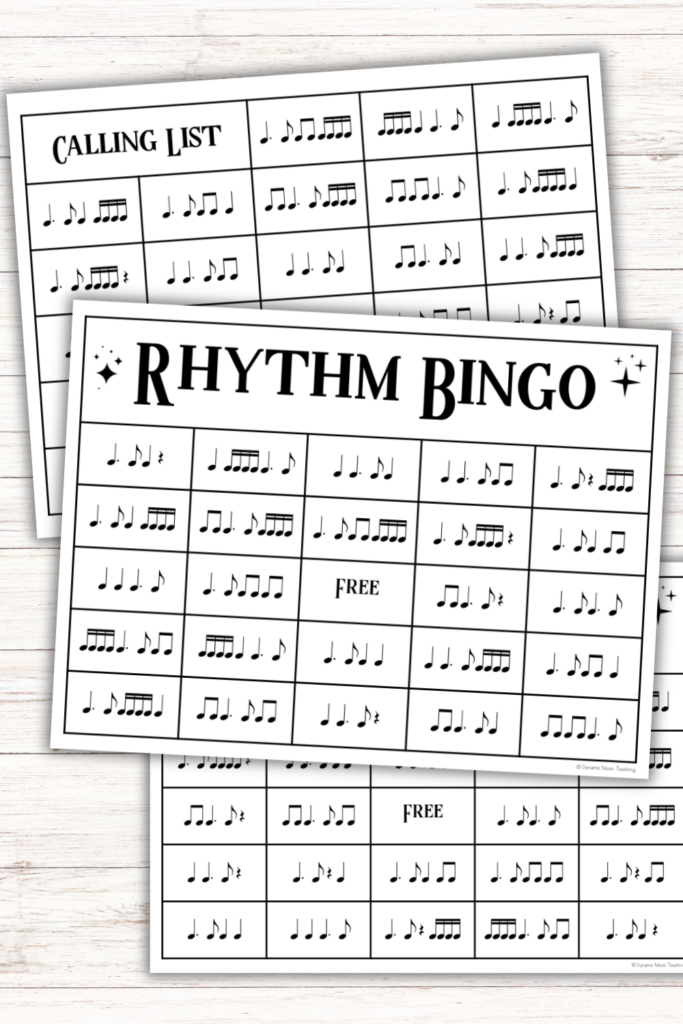
You can keep it very simple for younger students or make it more challenging for older ones just by changing what’s on the board.
For example:
- Beginner: less squares on the board to limit the options, show the rhythm after clapping it.
- Intermediate: regular sized bingo board, clap the rhythm multiple times, and show it only if needed.
- Advanced: more complex rhythms, don’t show the rhythm, just clap it.
You can also:
- Require students to clap or say the rhyhtm before marking
- Use a “blackout” version (fill the whole board) for older students
When to Use Rhythm Bingo
Rhythm bingo is one of those activities that fits almost anywhere in your teaching.
It’s also a good option when you want to keep students involved without a lot of movement or noise.
A Few Variations Students Love
Once your students know how to play, you can change things up a bit to keep it interesting:
- Clap and cover: students must clap correctly before marking
- Visual check: teacher shows the visual rhythm before moving on
- Student-led: have a student call (clap) the rhythms instead of the teacher.
- Mystery rhythm: don’t show it, only clap it
These small changes will help adapt the game to various ages and levels of understanding.
Using Rhythm Bingo for Assessment
Even though it’s a game, this is actually a really easy way to check understanding.
As students play, you can:
- Walk around and see who is finding the correct rhythms
- Notice who hesitates or copies others
- Have students clap back the rhythms
It gives you quick, informal data without needing a formal test.
Ready-to-Use Rhythm Bingo Sets
If you don’t want to make boards yourself, having a ready-to-go set can save a lot of time.
I have printable rhythm bingo sets that include many different rhythm levels, so I can pull exactly what I need depending on what students need to review.
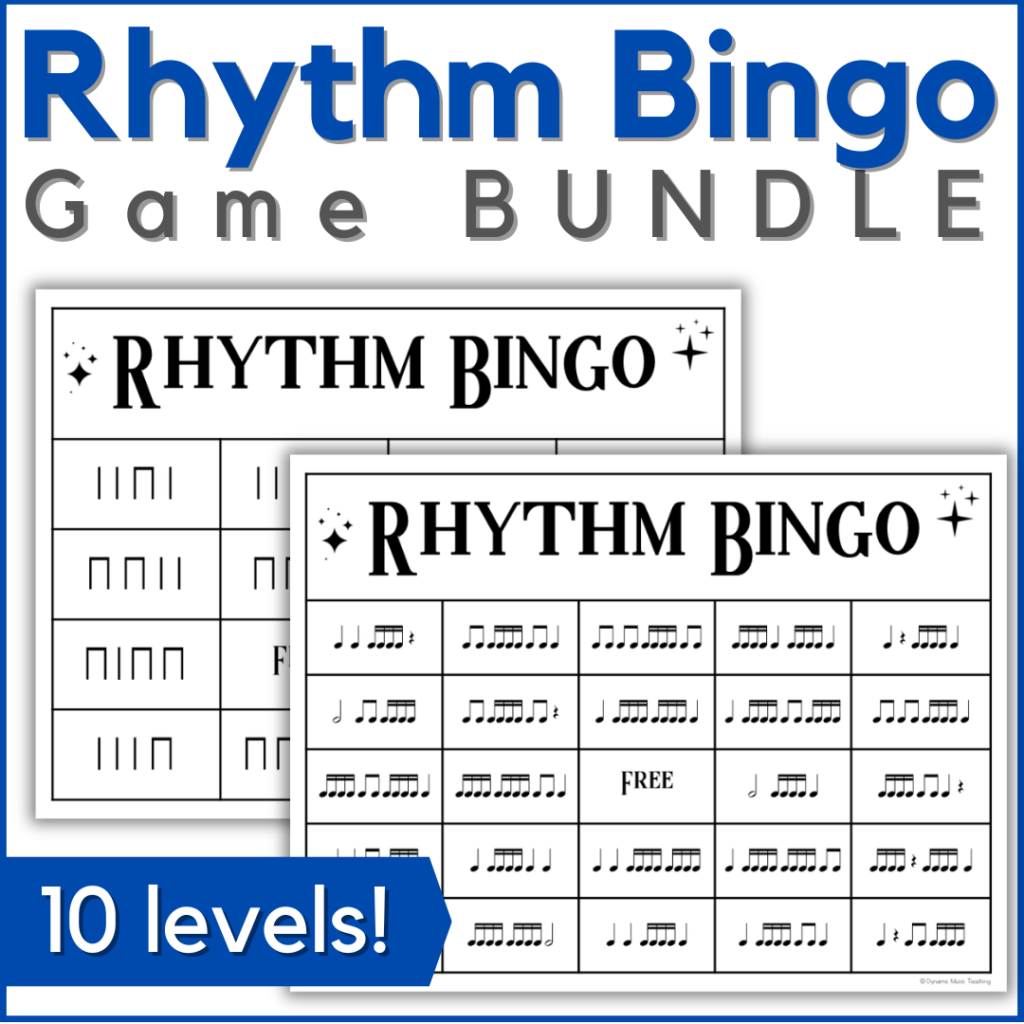
The rhythm bingo bundle includes:
- 10 different rhythm levels (from beginner to more advanced)
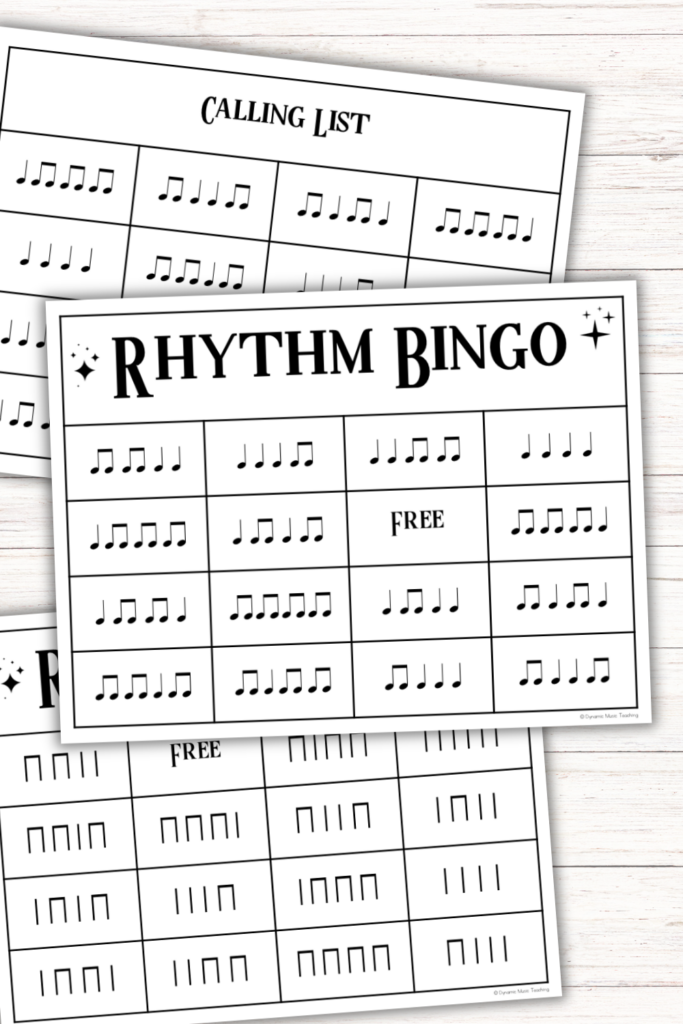
- Both standard notation and stick notation options
- 50 boards per level, so students all have different cards
- Calling cards in different sizes depending on how you want to run the game (small cards to save on printing, or full page options if you want to hold them up for students to see).
You can print, laminate and reuse them, so you have a rhythm activity ready to go anytime.
You can find all the rhythm bingo games in my shop here.
More Rhythm Games to Try
If your students enjoy rhythm bingo, you can rotate it with other activities to keep things feeling new:
Do you have a favorite rhythm review game?
Rhythm bingo is one of those simple activities that ends up being really useful to have in your back pocket. It’s easy to play, works with any age group, and gives students a lot of practice without feeling repetitive.
If you need a reliable rhythm review that doesn’t take much prep, this is definitely one to keep in your rotation.