
The best music appreciation activities are music listening activities. Every student already loves listening to music, but they usually struggle to listen actively. Students stay much more engaged when they have a simple task to complete while listening.
These types of elementary music listening activities are great for calmer class periods, transitions after energetic lessons, sub plans, or introducing students to new styles of music and composers. They’re also easy to adapt for different ages and musical concepts.
Music Listening Activities for Kindergarten and Grade 1
For younger students, the simpler the better. At this age, listening activities don’t need reading. Instead, just use drawing, coloring, circling, or other simple visual responses to the music.
One of the easiest music listening activities for K-1 students is simply giving students a piece of paper and crayons and asking them to draw what they hear or how the music makes them feel. You can guide their listening with simple prompts such as:
- Draw how the music makes you feel
- Draw what the music reminds you of
- Draw fast or slow depending on the tempo
- Circle happy or sad faces to match the mood of the music
These activities are easy to prep, work well for substitutes, and help students sit still and practice focused listening.
Music Listening Activities for Grades 2-4
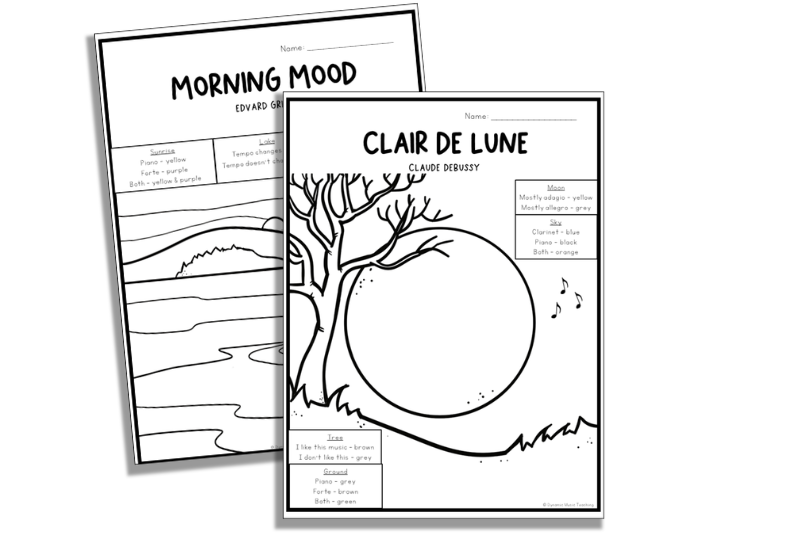
For grades 2-4, I love listening glyphs and coloring-based music listening worksheets. These are favorite elementary music listening activities because students stay engaged while also practicing music vocabulary and listening skills.
If you haven’t used listening glyphs before, students color different parts of a picture based on what they hear in the music. For example:
- If the music is forte, color the apple red
- If the music is piano, color the apple green
- If the music is allegro, color the tree brown
- If the music is adagio, color the tree green
Students listen carefully and make coloring choices based on musical elements like:
- Dynamics
- Tempo
- Mood
- Instrument families
- Articulation
Listening glyphs can be tailored to almost any piece of music or musical concept. You can make them very general so they work with almost any listening example, or create more specific questions to match a specific piece.
These types of music appreciation activities are especially good at keeping students engaged since students are actively doing something while listening instead of passively sitting still.
Music Listening Activities for Grades 4-8
As students get older, they often become more particular about coloring activities. By upper elementary and middle school, some students don’t want to color “kiddie” pictures. (Although, you might be surprised, coloring is pretty popular!)
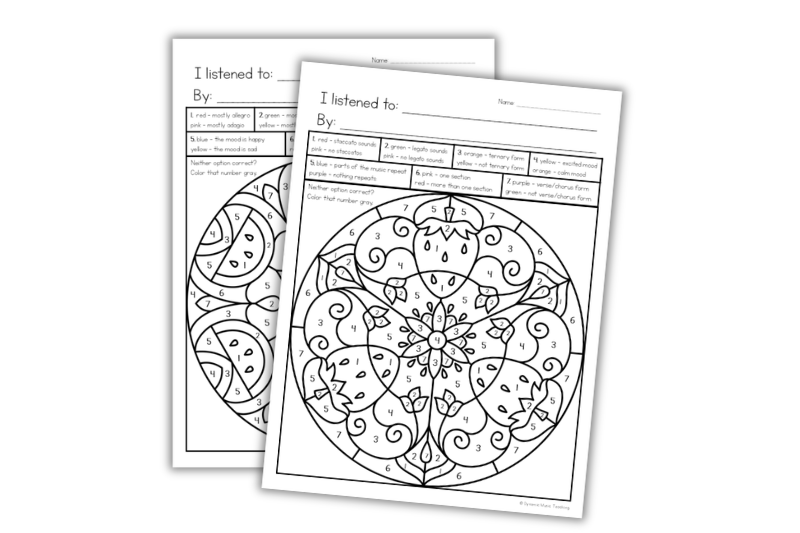
For this age group, I’ve found that mandala-style coloring pages work much better. Since the designs are more abstract, students can focus on the listening activity itself without worrying about whether the pictures look right.
Mandala-style active listening activities for music also feel more mature and work well with middle school students.
At this age, you can also include more advanced listening questions depending on what your students are learning. In addition to tempo and dynamics, students can listen for:
- Meter
- Form
- Instrument families
- Major vs. minor
- Texture
- Etc.
For example:
- If the music changes tempo, color the A’s blue
- If the music doesn’t change tempo, color the A’s orange
- If the music sounds minor, color the B’s yellow
- If the music sounds major, color the B’s green
Because the coloring itself is calming, these activities work especially well after energetic lessons, before breaks, during quieter class periods, or with a sub
How to Make Your Own Music Listening Worksheets
One thing I love about these music listening activities is that they are very easy to create yourself.
For younger grades, all you really need is:
- A piece of paper
- Crayons or pencil crayons
- A piece of music to listen to
For listening glyphs or coloring worksheets, start by placing a simple picture or design on the page. Then, create 4-5 listening prompts connected to colors.
For example:
- Apple:
- piano = red
- forte = green
- both = yellow
- Table:
- tempo changes = brown
- tempo doesn’t change = blue
You can tailor the questions to a specific listening example, or keep them general enough to re-use with many different songs or pieces.
If you prefer ready-to-go options, I also have printable listening glyphs and music listening worksheets for multiple grade levels in my shop:
Famous Classical Music Listening Glyphs & Worksheets
Mandala-style Music Listening Glyphs