If you teach music, you already know this problem:
Students need a lot of repetition to really understand quarter note and eighth notes, but doing worksheets or clapping drills over and over gets boring fast.
The good news is, rhythm practice doesn’t have to feel repetitive.
With a few simple, familiar games, students can get tons of meaningful practice reading, clapping, and recognizing rhythms without it feeling boring.
Here are some of my favorite ways to practice ta and ti-ti / quarter note and eighth notes that students love.
Start with Simple Rhythm Practice
Before turning to games, you need to build a the foundation.
Simple activities like:
- explaining and modeling the new rhythm
- echo clapping
- speaking rhythms (ta, ti-ti)
- tapping, clapping, or stepping to rhythm patterns
…are still really valuable, especially when introducing these rhythms for the first time.
Once students have a general understanding, but still need more practice, games are the answer! They’ll give students the repetition they need in a much more engaging way.
Turn Ta and Ti-Ti Rhythm Practice into a Game
Once you’ve introduced quarter note and eighth notes, turning additional practice into a game is my favorite way to keep going.
Instead of repeating the same exercise, you can keep the skill the same (reading, recognizing, and playing quarter and eighth notes) while changing the format.
All of these games work for both elementary music classrooms as well as in private music or piano lessons.
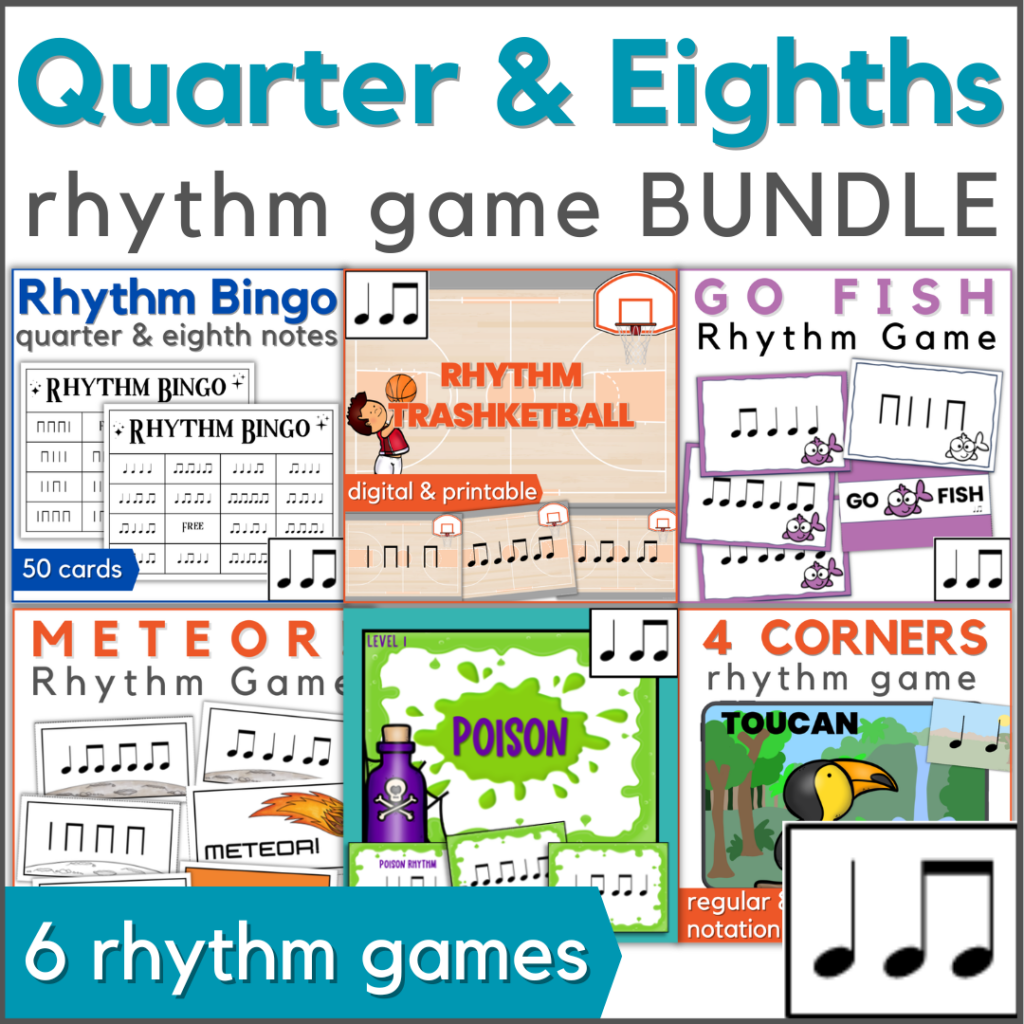
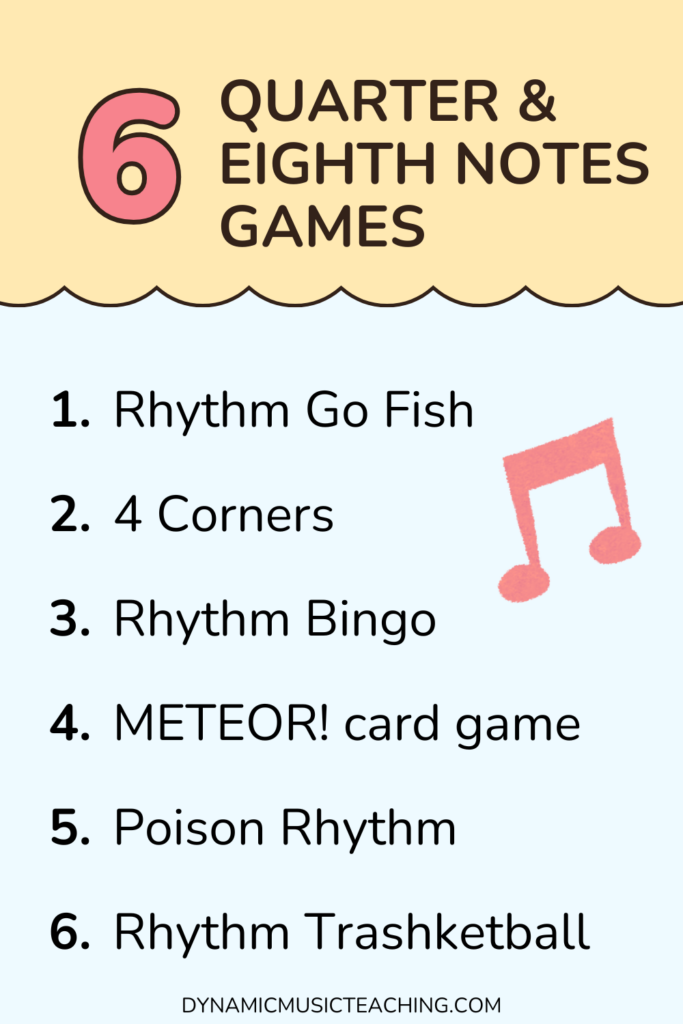
Here are a few easy rhythm games I love for quarter and eighth notes:
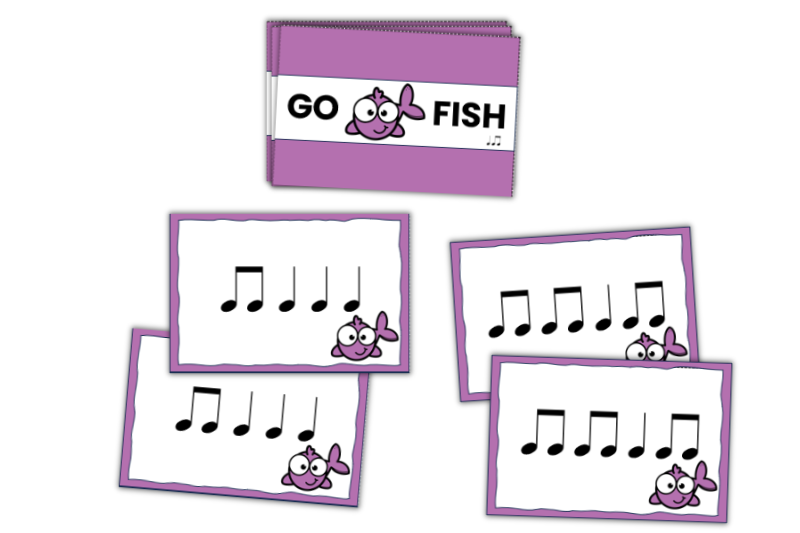
Rhythm Go Fish for Quarter Note and Eighth Notes
What students are practicing:
Rhythm recognition, reading quarter notes and eighth notes, and matching patterns by sight and sound.
How to play:
Students play in pairs or small groups with a ,deck of rhythm cards. Each player starts with 5–7 cards depending on group size.
On each turn, a student asks another player for a matching rhythm by saying, clapping, or tapping the pattern on their card. If the other player has the card, they hand it over and the asking player gets another turn. If not, they say “Go Fish,” and the student draws a card from the pile.
The game continues until the cards run out, and the player with the most pairs at the end wins.
You can read my more detailed instructions for rhythm go fish here.

4 Corners Active Rhythm Game
What students are practicing:
Hearing rhythms in everyday words.
How to play:
Place one rhythm card in each corner of the room. (For example, the posters could be: a quarter note, two quarter notes, 2 eighths-quarter note, and 4 eighth notes)
The teacher shows and speaks a word in rhythm. For example, ‘polar bear’ sounds like ti-ti, ta (2-eighths, quarter note). Students decide which corner matches the rhythm.
Two ways to play:
- Students move to the corner they think is correct
- Or assign students to start in different corners. Students stay in their corner and sit/stand if they are correct (for easier classroom management)
Continue with multiple different words. Students who make incorrect choices simply rejoin the next round.
Alternately, you could post a longer 4-beat pattern in each corner, and clap different rhythms instead of using words. However, I find the words (especially if you include slides with images of the words) make the game more engaging.
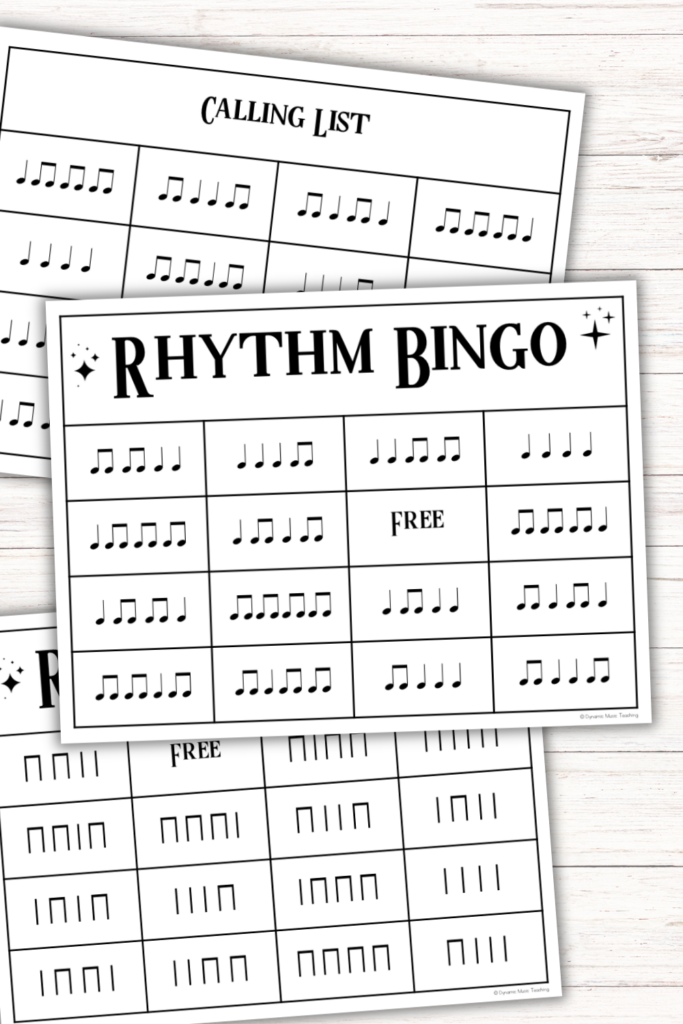
Rhythm Bingo for Quarter & Eighth Notes
What students are practicing:
Rhythm recognition and listening skills using quarter notes and eighth notes.
How to play:
Each student receives a bingo card with 4-beat rhythms in each square. The teacher claps, says, or plays a rhythm pattern.
Students listen and find the matching rhythm on their card. If they have it, they cover it with a marker. The teacher repeats each rhythm multiple times to give students time to think. For struggling students, you may also hold up a flashcard of the rhythm after you clap it.
The first student to complete a row, column, or full card calls “Bingo.” The teacher checks the card to be sure all the rhythms were actually called. Play can continue to allow multiple students to win.
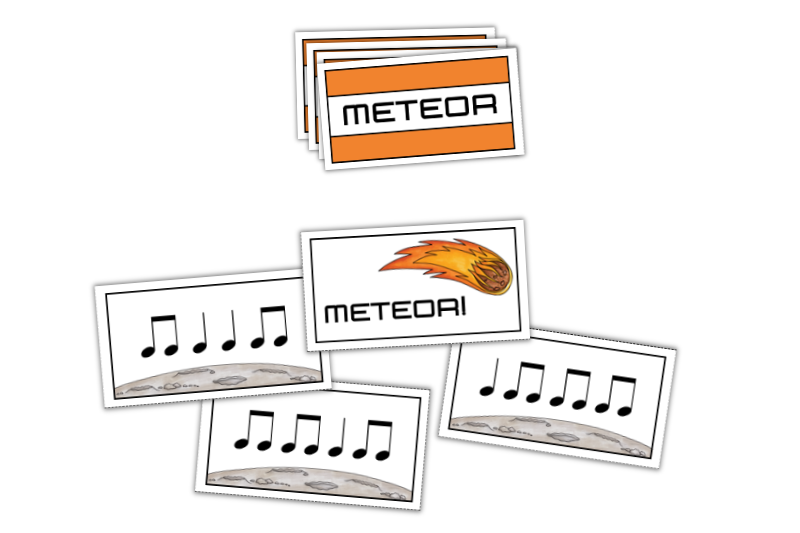
METEOR! Rhythm Card Game
What students are practicing:
Rhythm reading accuracy, quick recognition of rhythm patterns to build fluency with quarter and eighth note patterns.
How to play:
Place the cards face down in a pile. Students take turns drawing one card at a time.
When a student draws a card, they must clap, tap, or say the rhythm correctly. If correct, they keep the card. If incorrect, it goes back into the pile.
If a student draws a METEOR! card, they must return all collected cards back to the pile, including the METEOR! card.
Continue playing for a set time or until all cards are gone. The player with the most cards at the end wins.
You can purchase the METEOR! game in my shop here.
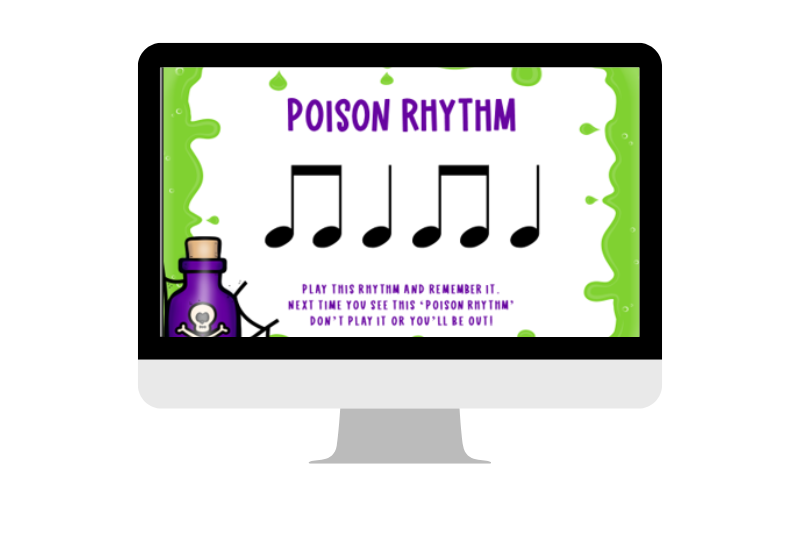
Poison Rhythm
What students are practicing:
Quick aural or visual rhythm recognition, rhythm echoing, and clapping quarter and eighth note rhythms
How to play:
The teacher chooses one rhythm pattern to be the ‘poison rhythm.’ Tell the students they must not clap the ‘poison rhythm’ or they are ‘out’. The teacher progresses through clapping various rhythm patterns which the students must echo by clapping.
The teacher mixes in the poison rhythm throughout the game. If students perform the poison rhythm when it appears, they are out for that round and sit down or step aside.
Continue quickly through multiple rhythm patterns, occasionally returning to the poison rhythm. The last students still standing at the end of the round are the winners.
This is best played as quite a fast-paced game, so students who are out will not be sitting out for very long before they re-join the next round of the game.
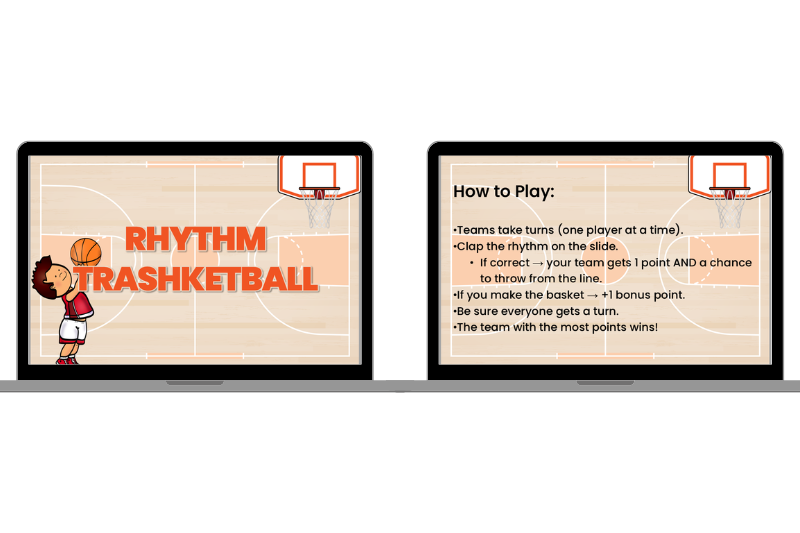
Rhythm Trashketball
What students are practicing:
Rhythm reading accuracy, and teamwork
How to play:
Divide students into two or more teams. One student at a time from alternating team sis shown a rhythm to clap, tap, or say.
If the student performs the rhythm correctly, their team earns one point. They also get a chance to shoot a ball or crumpled piece of paper into a bin or basket for a bonus point.
Rotate through students so everyone has a turn. The team with the most points at the end wins.
You can read more detailed directions for rhythm trashektball here.
Keep It Simple and Consistent
You don’t need a huge variety of activities to teach rhythm effectively.
Using a few familiar game formats like go fish, 4 corners, and trashketball often works better than introducing something new every class. And in most cases you can use the same few types of games to review many different concepts throughout the year.
When students are familiar with how a game works, they can focus more on the rhythms rather than on how to play the game.
With a few simple, low-prep games, you can give students the repetition they need while keeping them engaged, active, and actually enjoying the process.
Print & Go Games for Quarter and Eighth Notes